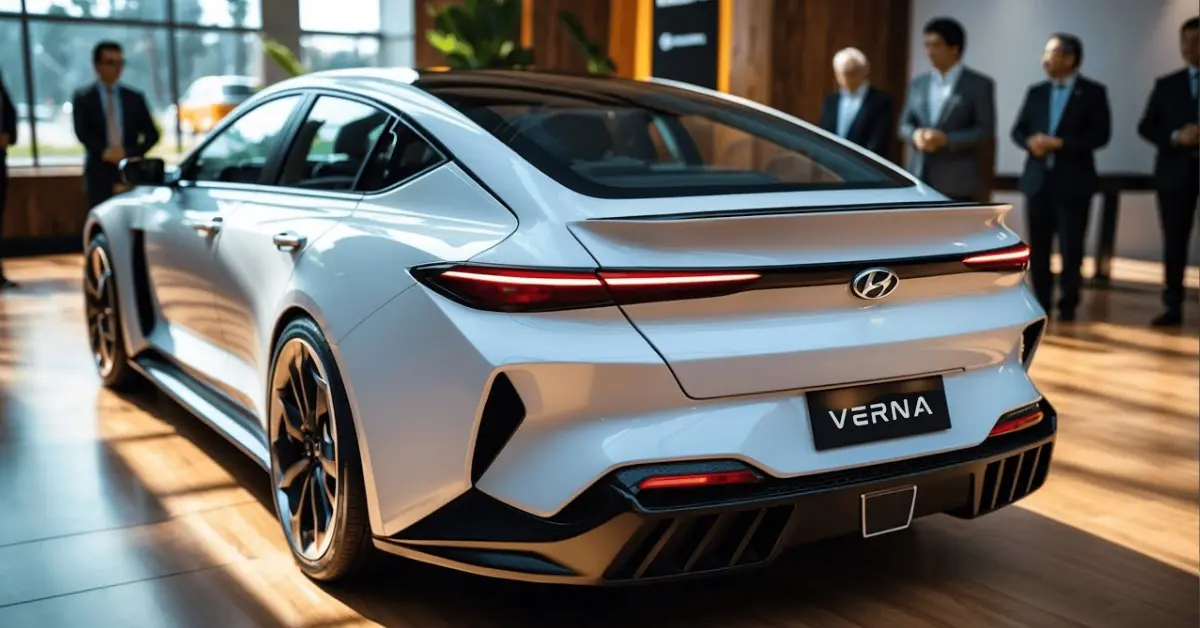
Hyundai is preparing to step up the one of the most popular sedans in India, the Verna, at the beginning of 2026. The Hyundai Verna facelift of 2026, as the spy shots have verified, incorporates a combination of minor exterior changes and a big leap in technology within the interiors, which is making the Hyundai Verna an exciting new beginning in the life of the mid-size sedan.
Upscale and Crusade Exterior Cleaning.
Although the basic outline of the Hyundai Verna has also not been changed, the new model has re-designed front and rear bumpers that give it a more sharp and more advanced appearance. The grille is slightly adjusted, which is helped by the reenergized LED projector headlamps with DRLs and smoother fog lamp enclosures which enhance the appearance as well as illumination efficiency.
Familiarized LED tail lamps and sporty rear spoiler are carried over at the back preserving the identity of Verna. Alloy wheels have not lost their existing sporty design which adds to the poised stance of the sedan. These subtle but effective changes make the Verna not grow old and forget the flavor that has made it famous.
Revolution in the interiors: Multi Curved Display and Ultimate Comfort.
The 2026 update gives the cabin a modern technology haven. The largest upgrade is the new dual curved 10.25-inch design – a large curved driver display with the same size infotainment touchscreen. This two-screen interior, which is similar to that of the new Venue and Creta of Hyundai, makes the cockpit highly futuristic and easy to use, as well as visually stunning. The redesigned user interface is characterized by sharp graphic representation, simple personalization, and voice recognition and wireless smartphone connectivity (Apple CarPlay and Android Auto) make life easier.
To go hand-in-hand with this technological upgrade, the new D-cut steering wheel has an ergonomic tilt and telescopic adjustment, and can contain multimedia, cruise control and voice activation controls. Interior is of high quality materials, soft plastic touch, and ambient mood lighting, which elevates the level of refinement. Front seats are ventilated and a panoramic sunroof make the interior of the plane even more luxurious and comfortable.
Tested Powertrains to do efficient and enthusiastic driving.
Hyundai will still have the same 1.5-litre MPi naturally aspirated petrol engine with 113 hp and 143 Nm of torque and a slick 6-speed manual or smooth IVT automatic transmission. Drivers who need an add-on thrill will be offered the powerful 1.5-litre turbo-petrol, which has 160 hp and 253 Nm of torque, paired with 6-speed manual or quick 7-speed dual-clutch transmission (DCT). The proven powertrains will offer an exhilarating but efficient driving experience, which fits both urban traffic and highway driving.
Segmented Safety Advanced Driving Assistance Systems.
The facelift highlights will be when Hyundai unveiled Level 2 Advanced Driver Assistance Systems (ADAS) system, the first in its segment that will enhance active safety and driving comfort significantly. It is fitted with adaptive cruise control, lane-keeping assist, blind spot warning, driver attention alerts, front collision warning, automatic emergency braking, and safe exit warning features, which provides drivers with peace of mind and semi-autonomous driving functions.
The conventional safety features such as six airbags, ABS with EBD, electronic stability control, rear parking camera and ISOFIX child seat anchors are standard and this goes to prove that Hyundai cares about occupant safety.
Comfort and Ride Quality Driving.
The 2026 Hyundai Verna retains a highly-yet tuned suspension system featuring MacPherson struts in the front and multilink rear suspension system designed to offer a relaxed ride – smooth over bumps and yet stable to handle. The 5 passenger cabin of the sedan has ergonomic seats with spacious legroom. The trunk size is quite large at 14-cubic-feet and provides a high level of luggage capacity which encourages the idea of practicality among the family and everyday commuter.
Remaining in a Competitive Segment.
The new Hyundai Verna still has to go directly up against the established players in the segment, such as the Honda City, Skoda Slavia, and Maruti Suzuki Ciaz. The Hyundai approach of raising design changes with technological advances and superior safety protocols put the new Verna as an attractive package among those buyers who value cost, design and safety within the price range of 12 to 15 lakh Rs.
What to Expect at Launch
The facelift Verna will be launched in early 2026 and will likely have several different trims to attract different customers. The prices will be moderately raised to reflect technology and safety improvement without affecting the level of affordability. The wide network of service located in Hyundai and its increasing resale values contribute to the attractiveness of the Verna to the market.
The Hyundai Verna facelift of 2026 moves it one step further towards the premium compact sedans by combining upscale but humble aesthetics, plush and technology-oriented interior, and the best-in-class safety attributes. It is a timely upgrade that combines the tradition of reliability and the new innovativeness that Hyundai will be known by as well as being able to please the modern Indian customers who want their new sedan to be stylish, have substance, and a sense of peace of mind.

